
Van Jones Promotes Smart Grid, but is it Really Smart?
 Tuesday, April 14, 2009 at 10:32PM
  You can also listen to this story, or find it at my iTunes store.
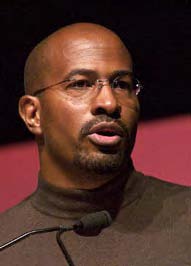
If ever you need to push a progressive agenda, you’d do well to have Van Jones on your side. The first time I saw him, at a conference in Oakland speaking about his work with incarcerated youth, he transfixed an audience of six-hundred for forty-five minutes of laughter and tears and applause. The Yale-educated civil rights attorney is a heavyweight orator: Who else gets a round of applause after their congressional testimony?
So naturally I was excited when Jones joined President Obama’s green-team, but he’s going to have his hands full with the big utilities and their so-called “Smart Grid” program. You see, anytime I’m told something is smart, I just have to check, and in this case, my worst fears were realized. So when Jones told Congress that building the “Smart Grid” would create benefits on the level that building our interstate highway-system did, I cringed. When he said that consumers would save money due to improved energy efficiency, I sighed. Here’s the problem:
First, the benefits of our interstate highway system are a direct result of our decision to put our highways in the public trust, rather than allowing them to be privately owned. Imagine selling our highway system to General Motors, and letting them decide which cars are allowed on the road. It’s unthinkable, and yet with electric power we are still letting big utilities dictate who gets to put their electricity on the wires. Is it any wonder that the power grid is still dominated by a few, big players rather than by thousands upon thousands of renewable energy entrepreneurs?
As far as energy efficiency goes, the days when consumers could save money by becoming more energy efficient are fading fast. Many states have already passed laws ensuring that when consumers cut their electricity use, utilities are still entitled to the same amount of money. Here’s how it works: If you cut your electricity bill by becoming more efficient, the utility simply bills the amount you saved to other customers. Here in New Mexico, utilities call this charge an “Energy Efficiency Fee”. As electricity use goes down, they simply increase the fee. Guaranteeing the utility’s revenues as usage falls was necessary, we are told, to allow them to go into the energy efficiency business. Utilities promoting energy efficiency? Boy, are we gullible. Using that logic, we should guarantee gasoline revenues, and then put ExxonMobil in charge of curing petroleum addiction!
The “Smart Grid” program that Jones is promoting doesn’t fix these problems – it makes them worse. When the Bush administration was writing the rules for the program, they included a provision requiring States to pursue policies that allow utilities to recover the value of assets rendered obsolete by “Smart Grid”. Now that’s a mouthful, so here’s a translation: If the old, dumb grid becomes useless after we build the new, smart one, we have to keep paying for it anyway. From a legal perspective, that is groundbreaking: I don’t know of any other industry that has a law protecting it from obsolescence. I hope the makers of eight-track tapes don’t catch on to this – they’re gonna want a piece of that action!
Van Jones’ new job in the Obama administration is to ensure that our green-energy programs create benefits across the socioeconomic spectrum. Jones is already saying that greening the power grid could create the kind of jobs that lift people out of poverty. What he isn’t saying is that our power grid has always had that potential. He needs to point out that the reason it hasn’t happened is that private ownership of the grid has given utilities too much control.
Now that he’s got the president’s ear, there’s an unprecedented opportunity to reconfigure the power grid in a way that allows all of us to participate in making it green. Putting the grid in the public trust would start us down the path to a more just and sustainable economy. It’s an opportunity we must capitalize on, and the time to do it has never been better.